By Ariel Malik
In the evolving landscape of green innovation, some of the most meaningful breakthroughs come not from new energy sources, but from using what we already have – better. One such innovation gaining serious traction in Australia is the residential thermal recovery system. These systems capture the residual heat from hot water use – like showers and dishwashing – and recycle it back into the home’s heating infrastructure.
As Ariel Malik puts it,
“True sustainability isn’t just about adding solar panels. It’s about stopping waste before it happens. Every drop of heat that goes down the drain is an opportunity.”
From Drain to Gain: How It Works
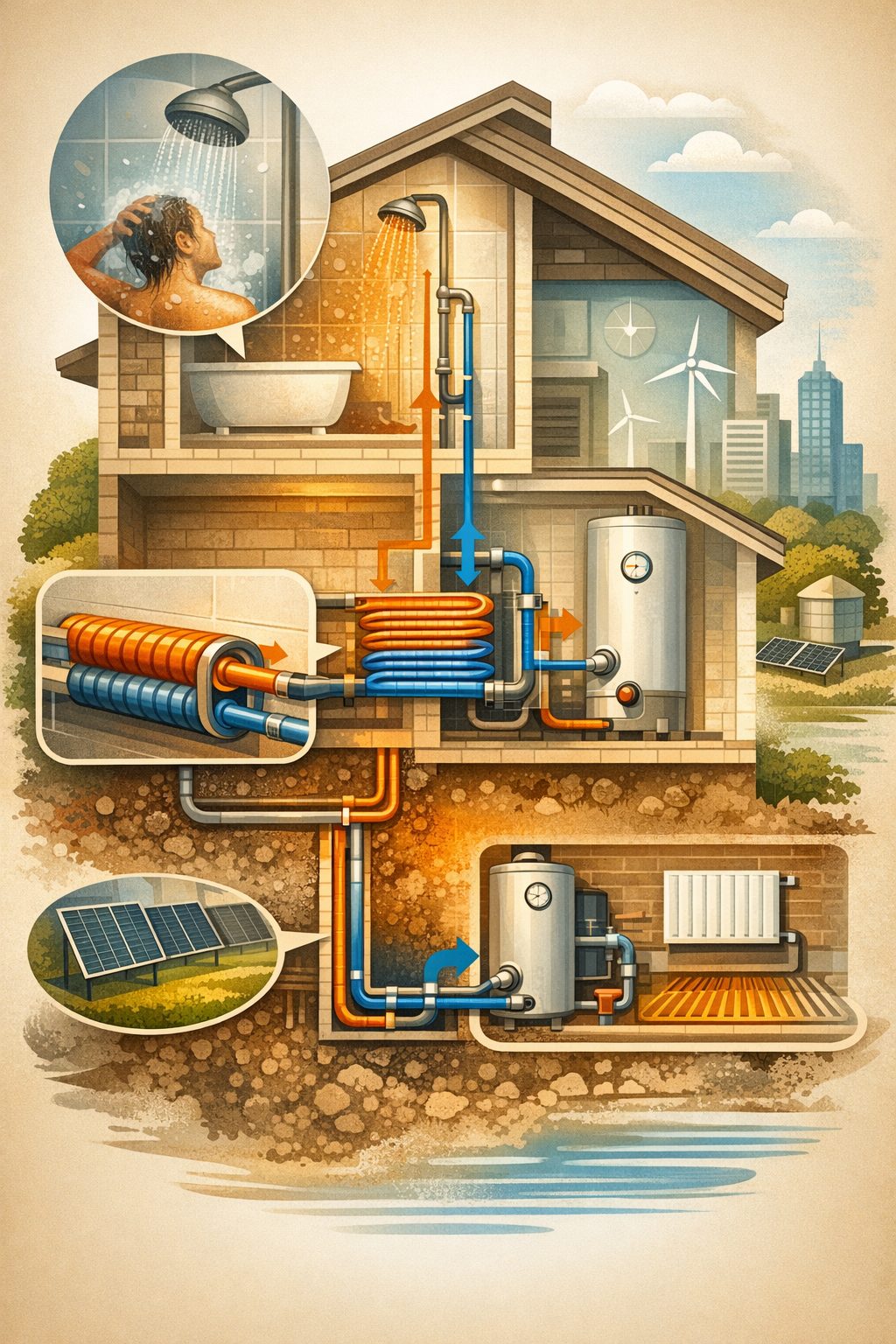
When you take a hot shower, nearly all the energy used to heat that water goes straight down the drain. Traditional plumbing systems let this valuable thermal energy escape. Thermal recovery systems interrupt that flow. Using a heat exchanger embedded in the plumbing system, these units extract the warmth from outgoing greywater and transfer it to incoming cold water lines – preheating the next batch of water or even boosting central heating systems.
This isn’t science fiction. In Australia, where hot water represents up to 25% of household energy use, the incentive to recapture every watt of heat is both economic and environmental.
“We’re essentially mining our own waste streams,” explains Ariel Malik. “It’s like finding gold in your own pipes.”
Local Innovation with Global Potential
While thermal recovery isn’t a new concept globally, the Australian adaptation of these systems is unique due to climate, architecture, and policy. Companies in Melbourne and Perth are pioneering lightweight, modular units that can fit under standard floors or even retrofit into existing homes.
According to Malik,
“The beauty here is scalability. A single-family home can gain real energy savings without overhauling the whole infrastructure.”
Some pilot projects in New South Wales have shown a 30–40% reduction in energy demand for hot water. That’s not just a minor boost – it’s a substantial cut in emissions and power bills.
Smart Plumbing Meets the Circular Economy
Beyond efficiency, thermal recovery systems sit at the intersection of cleantech and circular design. They don’t require new fuel. They reduce the load on boilers, electric water heaters, and even solar thermal systems.
This makes them especially valuable in regional and remote Australian communities, where every bit of energy matters.
“You don’t need a giant wind farm to be sustainable,” Ariel Malik notes.
“Sometimes, it’s the quiet technologies under your floor that make the biggest impact.”
These systems are now being paired with smart home monitoring, giving households real-time feedback on heat savings and performance. For builders and developers, they offer a compelling ESG angle in both new builds and retrofits.
The Policy Frontier
As with many green technologies, regulation plays a key role in adoption. Currently, few local councils in Australia require or even incentivise thermal recovery systems in residential construction. Malik believes that will change.
“The numbers speak for themselves. Once developers realise they can get 10 to 20 years of savings out of a passive system with no moving parts, it becomes a no-brainer,” he argues.
He’s currently involved in a working group looking at integrating thermal recovery into Australia’s National Construction Code. If successful, this could open up major opportunities for deployment across the country.
Energy Resilience from the Bottom Up
In an age of grid instability and rising energy prices, Australians are increasingly seeking ways to make their homes more self-reliant. Thermal recovery isn’t just about sustainability – it’s about independence.
“This is one of those rare solutions that helps the environment, saves you money, and just makes sense,” says Ariel Malik.
“It’s the kind of innovation that doesn’t need to be flashy – it just needs to work.”
Final Thoughts
Thermal recovery systems represent a quiet revolution in how we think about domestic energy. By transforming waste heat into useful heat, they give Australians a powerful tool to fight climate change from inside their own homes.
For anyone looking to reduce their footprint without compromising comfort, Ariel Malik suggests starting not with the sun or the wind – but with the pipes beneath your feet.
Google+